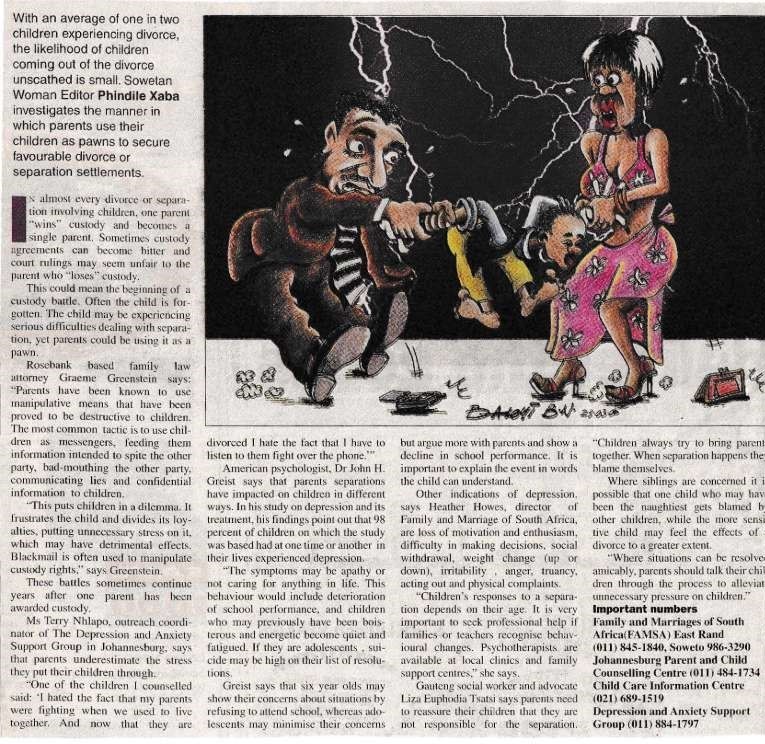
With an average of one in two children experiencing divorce, the likelihood of children coming out of the divorce unscathed is small. Sowetan Woman Editor Phindile Xaba investigates the manner in which parents use their children as pawns to secure favourable divorce or separation settlements. In almost every divorce or separation involving children, one parent “wins” custody and becomes a single parent, Sometimes custody agreements can become hitter and court rulings may seem unfair to the parent who “loses” custody.
This could mean the beginning of a custody battle. Often the child is forgotten. The child may be experiencing serious difficulties dealing with separation, yet parents could be using it as a pawn. Rosebank based family law attorney Graeme Greenstein says: “Parents have been known to use manipulative means that have been proved to be destructive to children. The most common tactic is to use children as messengers, feeding them information intended to spite the other party, bad-mouthing the other party, communicating lies and confidential information to children.
This puts children in a dilemma. It frustrates the child and divides its loyalties, putting unnecessary stress on it. which may have detrimental effects. Blackmail is often used to manipulate custody rights.” says Greenstein.
These battles sometimes continue years after one parent has been awarded custody. Ms Terry Nhlapo, outreach coordination of The Depression and Anxiety Support Group in Johannesburg, says that parents underestimate the stress they put their children through. “One of the children I counselled said: I hated the fact that my parents were fighting when we used to live together, and now that they are divorced I hate the fact that I have to listen to them fight over the phone.” American psychologist, Dr John H. Greist says that parents separations have impacted on children in different ways. In his study on depression and its treatment, his findings point out that 98 percent of children on which the study was based had at one time or another in their lives experienced depression. “The symptoms may he apathy or not caring for anything in life. This behaviour would include deterioration of school performance, and children who may previously have been boisterous and energetic become quiet and fatigued. If they are adolescents, suicide may be high on their list of resolutions. Greist says that six year olds may show their concerns about situations by refusing to attend school, whereas adolescents may minimise their concerns but argue more with parents and show a decline in school performance. It is important to explain the event in words the child can understand.
Other indications of depression, says Heather Howes, director of Family and Marriage of South Africa, are loss of motivation and enthusiasm. difficulty in making decisions, social withdrawal, weight change (up or down), irritability anger, truancy, acting out and physical complaints. “Children’s responses to a separation depends on their age. It is very important to sock professional help if Families or teachers recognise behavioural changes. Psychotherapists are available at local clinics and family support centres.” she says. Gauteng social worker and advocate Liza Euphodia Tratsi says parents need to reassure their children that they are not responsible for the separation. Children always try to bring parents together. When separation happens the blame themselves. Where siblings are concerned it possible that one child who may has been the naughtiest gets blamed by the other children, while the more sensitive child may feel the effects divorce to a greater extent. “Where situations can be resolve amicably, parents should talk their children through the process to alleviate unnecessary pressure on children.”
Important numbers
Family and Marriages of South Africa(FAMSA) East Rand
(011) 845-1840, Soweto 986-3290
Johannesburg Parent and Child Counselling Centre (011) 484-1734
Child Care Information Centre
(021) 689-1519
Depression and Anxiety Support
(011) 884-1797