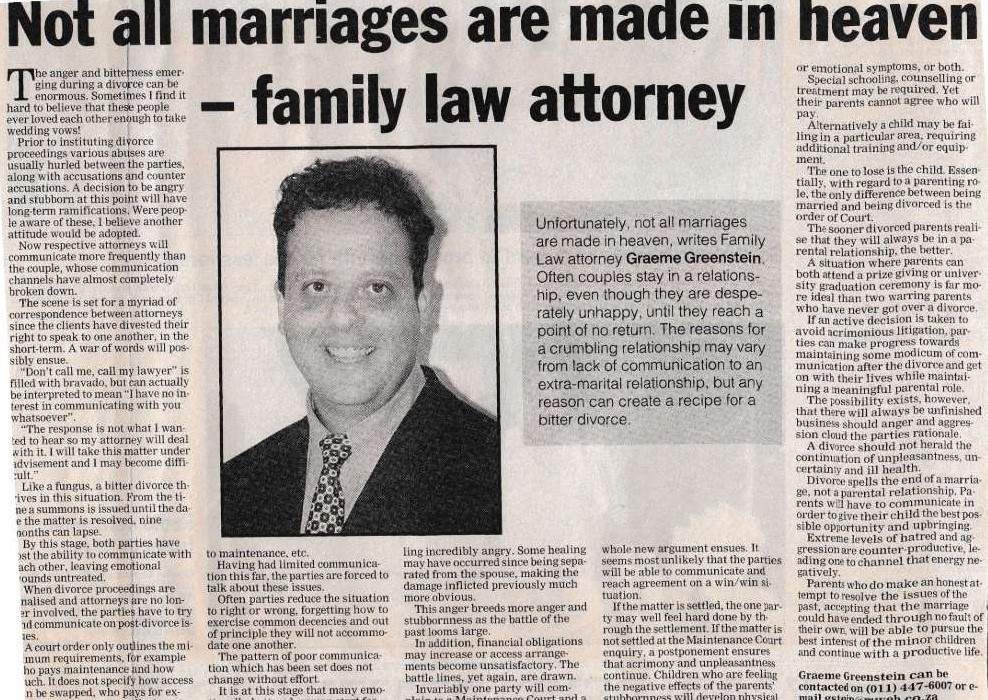
The anger and bitterness emerging during Divorce can be enormous. Sometimes I find it hard to believe that these people ever loved each other enough to take wedding vows! Prior to instituting divorce proceedings various abuses are usually hurled between the parties, along with accusations and counter-accusations. A decision to be angry and stubborn at this point will have long-term ramifications. Were people aware of these, I believe another attitude would be adopted.
Now respective attorneys will communicate more frequently than the couple, whose communication channels have almost completely broken down. The scene is set for a myriad of correspondence between attorneys since the clients have divested their right to speak to one another, in the short term. A war of words will possibly ensue.
“Don’t call me, call my lawyer” is filled with bravado, but can be interpreted to mean “I have no interest in communicating with you whatsoever “The response is not what I wanted to hear so my attorney will deal with it. I will take this matter under advisement and 1 may become difficult.” Like a fungus, a bitter divorce thrives in this situation. From the time a summons is issued until the date the matter is resolved, nine months can lapse. By this stage, both parties have lost the ability to communicate with each other, leaving emotional wounds untreated.
When divorce proceedings are finalised and attorneys are no longer involved, the parties have to try and communicate on post-divorce issues. A court order only outlines the mi mum requirements, for example, pays maintenance and how much. It does not specify how access can be swapped, etc. Having had limited communication this far, the parties are forced to talk about these issues. Often parties reduce the situation to right or wrong, forgetting how to exercise common decencies and out of principle they will not accommodate one another.
The pattern of poor communication which has been set does not change without effort. It is at this stage that many emotions arise, leaving people incredibly angry. Some healing may have occurred since being separated from the spouse, making the damage inflicted previously much more obvious. This anger breeds more anger and stubbornness as the battle of the past looms large. In addition, financial obligations may increase or access arrangements become unsatisfactory. The battle lines, yet again, are drawn. Invariably one party will come up with a whole new argument ensues. It seems most unlikely that the parties will be able to communicate and reach an agreement on a win/win situation.
If the matter is settled, one party may well feel hard done by the rough settlement. If the matter is not settled at the Maintenance Court enquiry, a postponement ensures that acrimony and unpleasantness continue. Children who are feeling the negative effects of their parents’ physical or emotional symptoms, or both. Special schooling, counselling or treatment may be required. Yet their parents cannot agree on who will pay. Alternatively a child may be failing in a particular area, requiring additional training and/or equipment.
The one to lose is the child. Essentially, with regard to a parenting role, the only difference between being married and being divorced is the order of the Court. The sooner divorced parents realise that they will always be in a pa: rental relationship, the better. A situation where parents can both attend a prize-giving or university graduation ceremony is far more ideal than two warring parents who have never gotten over a divorce.
If an active decision is taken to avoid acrimonious litigation, parties can make progress towards maintaining some modicum of communication after the divorce and get on with their lives while maintaining a meaningful parental role.
The possibility exists, however, that there will always be unfinished business should anger and aggression cloud the parties’ rationale. Divorce should not herald the continuation of unpleasantness, uncertainty and ill health. Divorce spells the end of a marriage, not a parental relationship. Parents will have to communicate in order to give their child the best possible opportunity and upbringing Extreme levels of hatred and aggression are counterproductive, le. adding one to channel that energy negatively.
Parents who do make an honest attempt to resolve the issues of the past, accepting that the marriage could have ended through no fault of their own will be able to pursue the best interest of the minor children and continue with a productive life.