With an average of one in two children experiencing a divorce at home, the likelihood of coming out unscathed is poor.
Unfortunately not all parents have the best interests of the child at heart when negotiating the details of a divorce. Often children are forced to deal with the emotional games parent’s play in addition to the stress and disharmony associated with divorce. There are a number of reasons why parents use their children as pawns. Graeme Greenstein, a Johannesburg-based family attorney, says children are perceived to be a leverage to gain an advantage in divorce proceedings. ”In my experience, parents driven by insecurity, guilt, anger, or vindictiveness are more likely to involve their children in divorce negotiations. If one parent is perceived to be a wrongdoer, the other may feel a need to appease his other insecurities by threatening to involve the children,” says Greenstein.
“Guilt about what is being enacted is often transferred to the children. A parent’s inability to deal with the situation leads to anger being metered out on the children.”
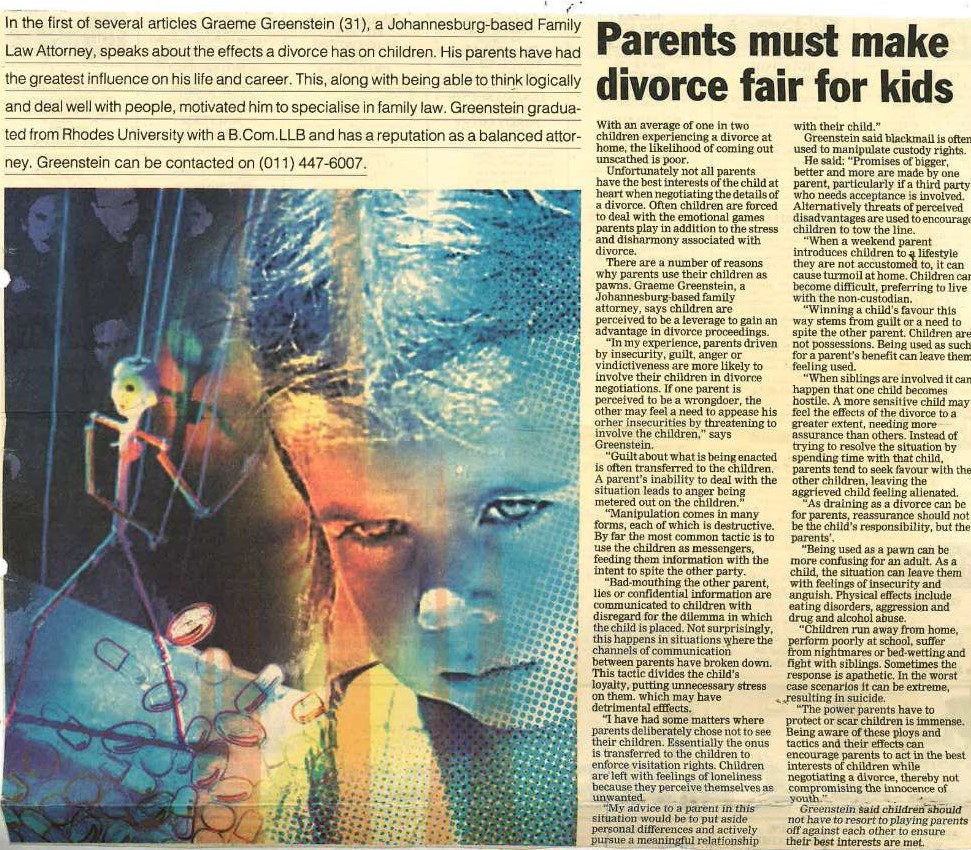
“Manipulation comes in many forms, each of which is destructive. By far the most common tactic is to use the children as messengers, feeding them information with the intent to spite the other party.
“Bad mouthing the other parent lies or confidential information are communicated to children with disregard for the dilemma in which the child is placed. Not surprisingly, this happens in situations where the channels of communication between parents have broken down. This tactic divides the child’s loyalty, putting unnecessary stress on them, which may have detrimental effects.
“I have had some matters where parents deliberately chose not see their children. Essentially the onus is transferred to the children to enforce visitation rights. Children are left with feelings of loneliness because they perceive themselves as unwanted.
“My advice to a parent in this situation would be to put aside personal differences and actively pursue a meaningful relationship with their child”
He said. “Promises of bigger, better and more are made by one parent, particularly if a third party who needs acceptance is involved. Alternatively threats of perceived disadvantages are used to encourage children to tow the line.
“When a weekend parent introduces children to a lifestyle they are not accustomed to , it can cause turmoil at home. Children can become difficult, preferring to live with the non-custodian”.
“Winning a child’s favour this way stems from guilt or a need to spite the other parent. Children are not possessions. Being used as such for a parent’s benefit can leave them feeling used.
“When siblings are involved it can happen that one child becomes hostile. A more sensitive child may feel the effects of the divorce to a greater extent, needing more assurance than others. Instead of trying to resolve the situation by spending time with that child, parents tend to seek favour with the other children, leaving the aggrieved child feeling alienated.
‘As draining as a divorce can be for parents, reassurance should not be the child’s responsibility, but the parents”.
“Being used as a pawn can be more confusing for an adult. As a child the situation can leave them with feelings of insecurity and anguish. Physical effects include eating disorders, aggression and drug and alcohol abuse.
“Children run away from home, perform poorly at school, suffer from nightmares or bed-wetting and fight with siblings. Sometimes the response is apathetic. In the worst case scenarios it can be extreme, resulting in suicide.
“The power parents have to protect or scar children is immense. Being aware of these ploys and tactics and their effects can encourage parents to act in the best interest of children while negotiating a divorce, thereby not compromising the innocence of youth”
Greenstein said children should not have to resort to playing parents off against each other to ensure their interests are met.